


Riley says
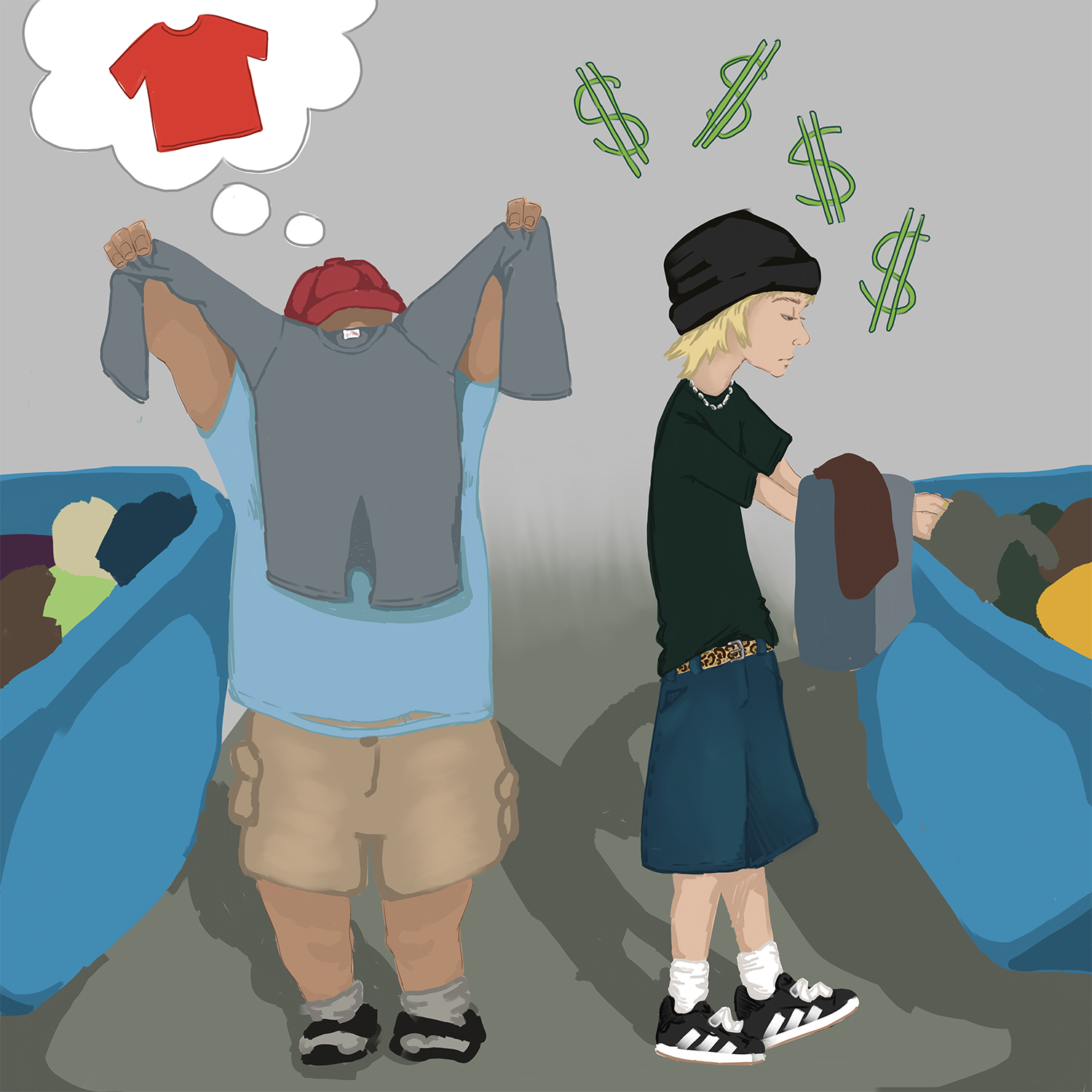
In the late 2010s, thrifting became mainstream in the United States. It went from being frowned upon to being normal and done by everyone. In the early 2010’s, thrifting was something that was only done by people in the ‘lower class’ of society, people who couldn’t afford anything better.
Then the switch happened. Someone, somewhere in America, realized just how much of a profit you could make from clothes you bought for 1-5 dollars. People who wanted to follow fashion trends, but didn’t want to spend the time looking or making their own clothes, found themselves on websites like eBay or Depop. The easy-to-navigate nature of these websites made it just too easy, and these ideas of buying hand-me-down clothes online for so much more than they were bought for exploded.
Reselling is the term used to describe this business, and in recent years, it has found new heights. In my opinion, the term vintage has lost its meaning and is thrown around way too much in this community, much like other words. The most sought-after brands are Hollister, Abercrombie & Fitch, Guess, Juicy Couture, JNCO, and many more. These brands’ clothing items are typically described as vintage, even if they aren’t over 20 years old.
Real vintage is found in vintage stores, and it’s better if they sell it in-store rather than online. There are no shipping prices, and the prices they sell at are typically correct and worth it for the items they sell. It is much better, and there is less snubbing and resellers taking over, unlike mainstream stores.
There might just be some people going to look for clothes for a good price, because maybe they don’t have the means to buy anything more expensive, and they find a cute jacket. They then put this item in their cart, look away, then back, and the item is gone. The person looks around for it, wondering where the jacket that would keep them warm this winter has gone. Then they see it. In the arms of someone wearing a new Balenciaga. The person can’t help but think, “When did thrifting become cool? And why are people so cruel?”
The answer is money, that’s all humans want. That’s why we work, that’s why we keep going, and why we as humans ruin everything we touch. For money. Money is power, and power is money.
To me, thrifting has been gentrified. They are cleared of quality clothing by resellers as the craze gets crazier, and people who just want clothes and rely on stores with low prices have nowhere to go. It gets even worse when thrift stores feed into it and raise prices, just so they don’t lose profit, while resellers make a profit. This is just cruel on both sides; both the stores and the resellers are ruining the lower-income people’s lives.
As trends come through, people overconsume. This can lead to unethical practices of resellers so they can keep up with demand. Due to this, not just lower-income people and families are snubbed, everyone is. A very commonly practiced unethical way resellers use to keep up with demand is buying from bad companies like Shein, and reselling bad quality clothing for 2-4 times more than they purchased it for and listing it as vintage or Y2K.
I believe that reselling hurts everyone, though it does help for some causes and has some pros to challenge its cons. On the other hand, reselling changes the game.
Cecilia says
Reselling is the game you should be playing.
Thrift culture has become so saturated over the years, making the shopping experience almost competitive; a race to find what “gems” hide in these thrift stores, but that saturation is exactly what needs to happen. Resellers make those rare, or highly desired clothing items available with little to no waste, making profits, and maintaining the value of vintage clothing and homeware.
I see it happening, in real time. Mass produced clothing ending up in landfills, “dry rotting” in a storage facility, over production for every single department store out there. There is simply too much waste in this world today, and reselling might be able to close that gap.
Reselling clothes keeps things out of landfills and into wardrobes.
From my own experience in the online clothing selling industry, it makes for a great side hustle in school and profits well from selling your own old clothes, but in the game of reselling, profits can become a living wage. Sellers known for their good finds become reliable to their customers and make a continuous flow of profit.
Vintage has value in 2026, and I believe reselling can help preserve the value of those certain items. From being sold at Goodwill for $3.99, to its inflated value of $65.50 on Depop, the extreme price, and whatever form of “gatekeeping” it may be, upholds its monetary worth.
Despite some bad, there is definitely some good to reselling, but you can argue both equally. Reselling shows how we have evolved as a society, and anyone can have their own opinion on whether it is bad or good.





Mike Selman • Mar 7, 2026 at 10:00 pm
I like what both of you had to say. My wife & I have always loved going to thrift stores. One it is good exercise to walk around & see all of the things they have. Second my wife has always been a great bargain shopper. Anywhere you can save money is her philosophy. Great job young ladies.