After the students and staff leave for the night, the hallways are left bare, air conditioning hums, and a constant feeling of eeriness floods over. Although students come and go, there is one resident that hasn’t gone home.
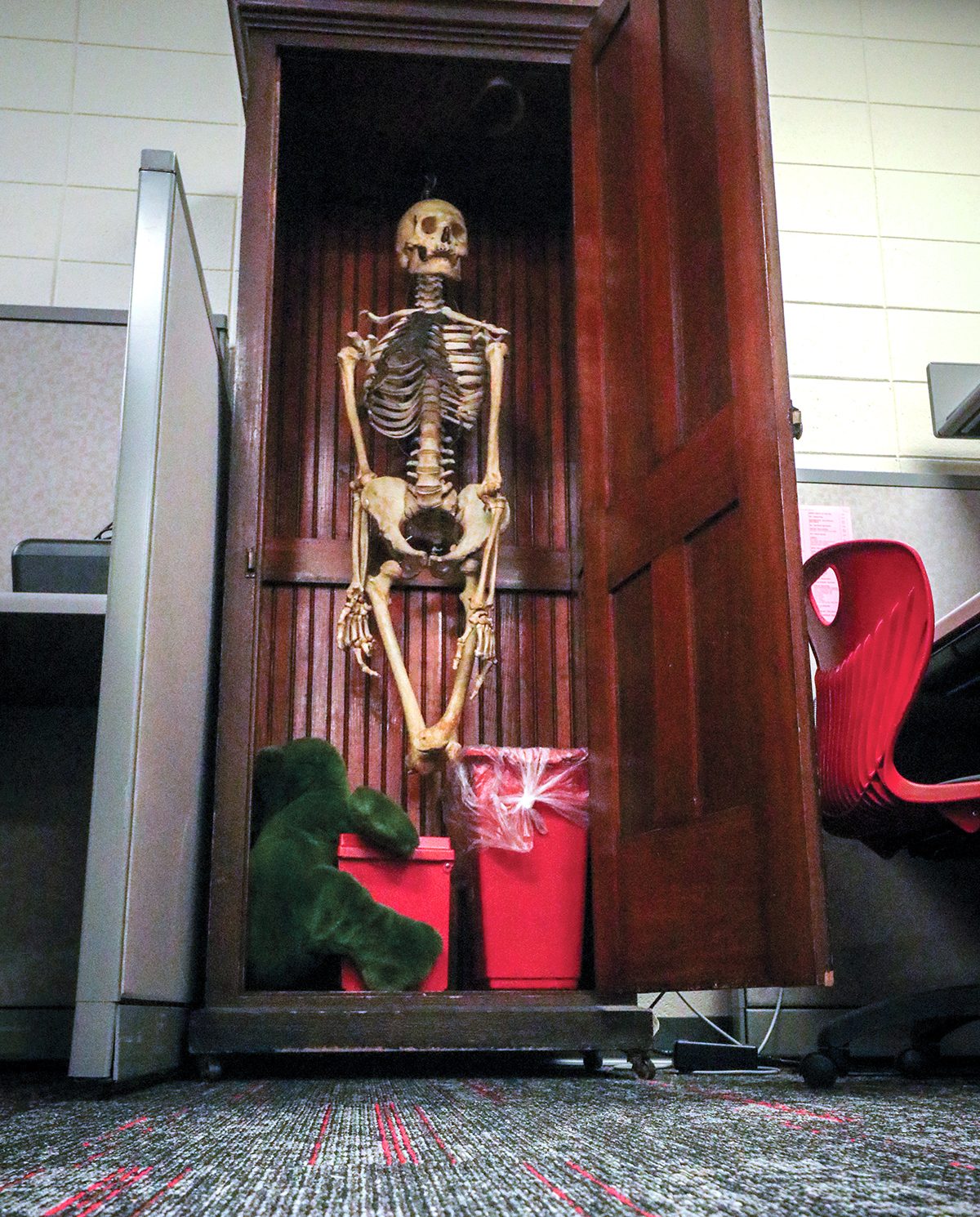
Haunting the halls is a real human skeleton. Kept alone in the storage area of the math and science office, she’s only visited once or twice a semester. The unknown woman was reportedly gifted to the school in a grant in the 1960s after her body was donated to science, bringing into focus the question of educational value versus the ethical grey area.
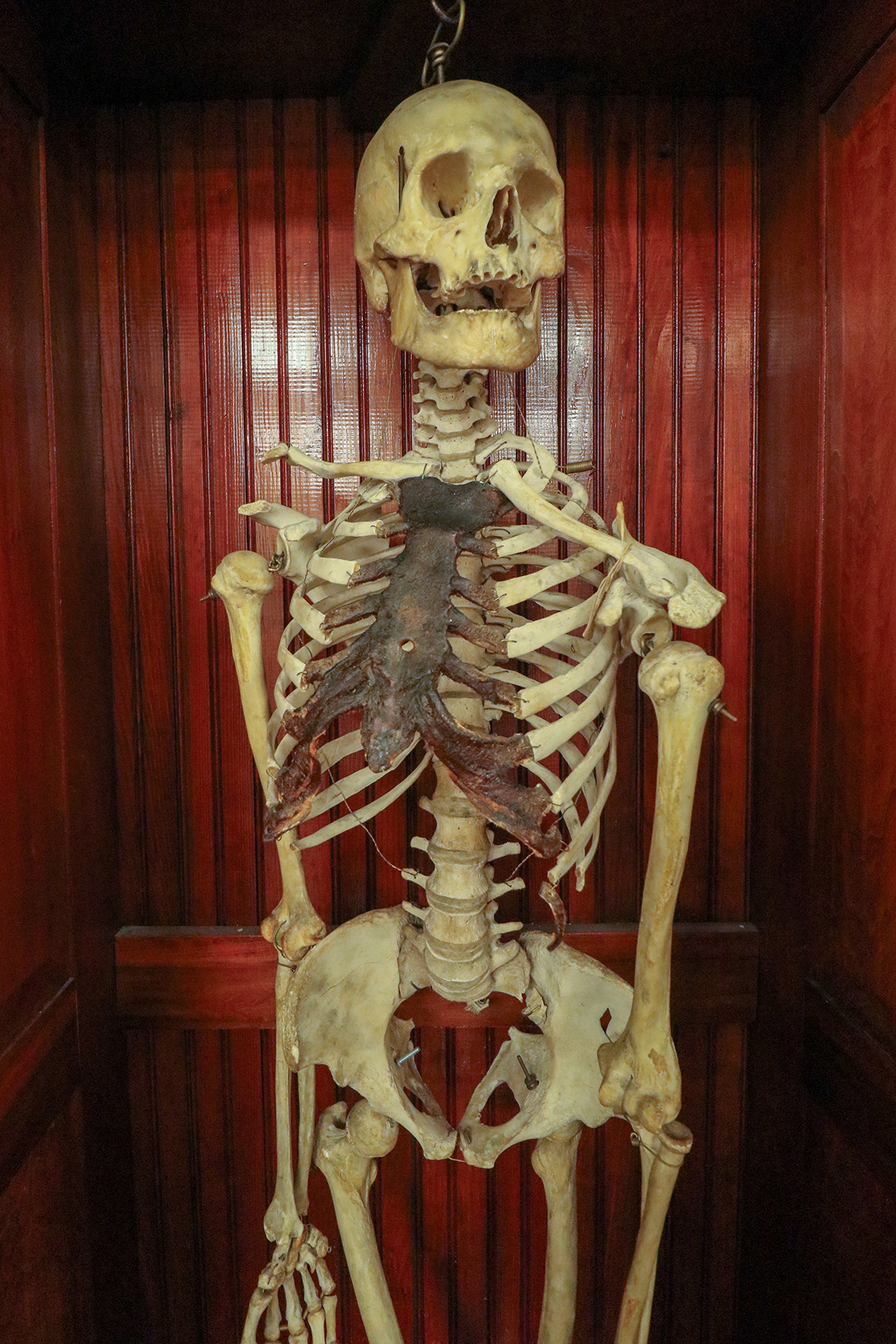
The skeleton is kept bolted inside a large armoire that was moved into the math science office in 2010 during the science classroom renovations. With the risk of being possibly disposed of improperly or mishandled, the science department decided to move her into safe keeping in the office; however, it has remained there ever since. Most likely, the records about the skeleton were kept on paper and are not digitally accessible. The identity and life of our school skeleton are unknown other than a few details. After the anatomy class’s annual visit, they are able to confirm with the pelvis and other skeletal markers that she was a woman, however that is all. No skeletal markers can determine her favorite food, where she grew up, and dreams of her future. There is no way to assess or understand who she was or the life she lived.
For the rest of the unit and following year, anatomy students will use the fake skeleton on a rolling cart in class. It is more accessible and can be touched and prodded to understand the movement of the human body, unlike the real skeleton. Professor William Blecher, Coordinator for the Graduate Certificate in Forensic Anthropology at the University of Nebraska-Lincoln, acknowledged that the human skeleton can serve as a real tool in the classroom,
“The tactile aspect—how the bone feels and its texture aids in teaching students osteology,” Blecher said.
He mentioned that he stresses to his students the importance of seeing all human skeletal materials as people.
“We should never make light of material; they were once living, breathing human beings,” Blecher said.
His role as a forensic anthropologist primarily involves determining human versus non-human remains as well as understanding the ethical complications.
There have been multiple guidelines and rules regarding the storage, use, and identification of human remains. For example, The Native American Graves and Repatriation Act of 1990 (revised 2023) requires public and private institutions that receive any federal funding to assess these types of materials, determine if they are Indigenous, and then go through a process of returning these remains back to local tribes. Furthermore, ethical best practices indicate that skeletal remains should always be secured in a locked area and treated with respect, not play.
Professor Blecher made it clear, however, that “educational value does not supersede the ethical concerns.”
Historically, real skeletal material was often sourced from disadvantaged groups in India or China as well as prisoners and the dead that did not or could not give their consent on how their body was used. However, “ethically donated materials (where someone desires and confirms they want their body to be donated to education or research) are becoming the standard,” Bleacher said.
Science Teachers Tori Haas and Nicole Kinzer both agree with this modern standard, noting that they plan to donate her body to science to contribute to the education of future students.
While students learn from her bones about human anatomy, the mystery surrounding her origins and the legal requirements of her continued use raise questions that echo in the empty hallways at night. Although her name and previous life are unknown, her story definitely lives on in the halls.