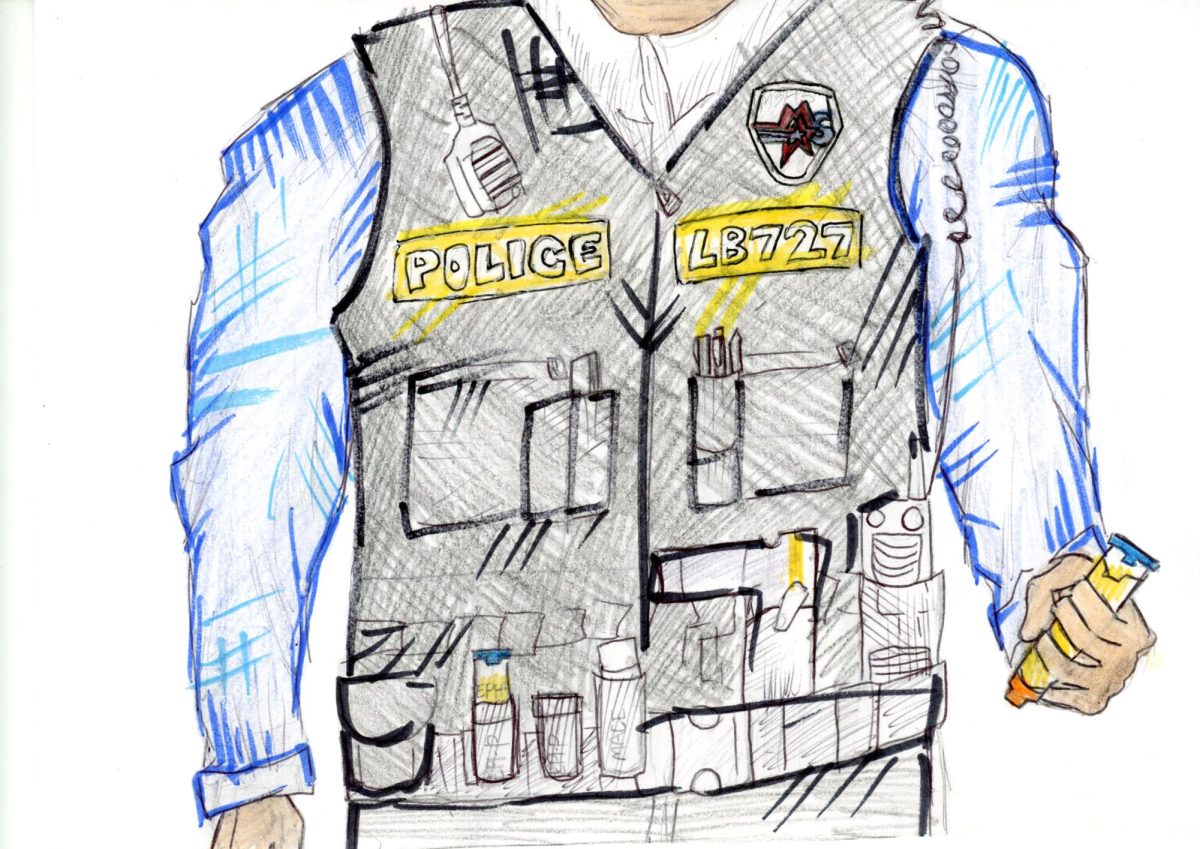
A new bill in the Nebraska legislature would give police officers the ability to administer life saving epinephrine as part of an emergency response. Specifically, LB 727 states, “A law enforcement agency may obtain, maintain, and possess epinephrine autoinjectors to be provided to or made available to such agency’s law enforcement officers pursuant to this section for use while in the performance of official duties; and a law enforcement officer may administer an epinephrine autoinjector in response to an emergency situation while in the performance of such officer’s official duties.”
Epinephrine comes in many different ways of delivery from Intramuscular (IM) to intravenous (IV) solutions and even nasal sprays that have recently been approved by the FDA. The bill calls for police to be able to carry and administer with an autoinjector known as an epipen.
A typical epipen is a clear and yellow tube with an orange cap on one end and a blue cap on the other. Another form of an epipen is called an AviQ. This injector is shaped like a small box and is much more slim than the original epipens. It comes with a cover over it and once removed it begins to play a message that explains in simple terms exactly what to do in the event of an allergic reaction. The introduction of this auto injector brought on a new confidence in both parents and children who use them. Another form of epinephrine that has been recently introduced is a nasal spray called Neffy. This new form of epinephrine is approved as being the most effective form of epinephrine due to its fast absorption though the nose.
Senator Kauth is working on an amendment to her bill that would allow officers to carry this instead of or in addition to epipens.
While allergies are all too common they can come in many shapes and sizes. They can range from intolerances to rashes and itchy spots and even full anaphylactic shock. Many of the less severe reactions can be handled with medications such as benadryl and zyrtec which are both over the counter allergy medications. For a severe allergic reaction, however, most go straight to using some form of epinephrine as that is the fastest way to counteract a reaction.
“I take benadryl when around cats and avoid eating those foods that I am allergic to,” freshman Kassie Basis said.
As of January 22nd, 2026 this legislative bill has made it through an introduction in the legislator and had moved onto the committee standings.Of the four people that participated in an interview, all four agree that law enforcement officers should be trained and alloüed to carry epinephrine for use in emergency situations üith sophomore Tatum Wiltgen stating “I think yes because it’s to make sure that if someone can’t breathe then officers have that just in case and can save someone’s life.”