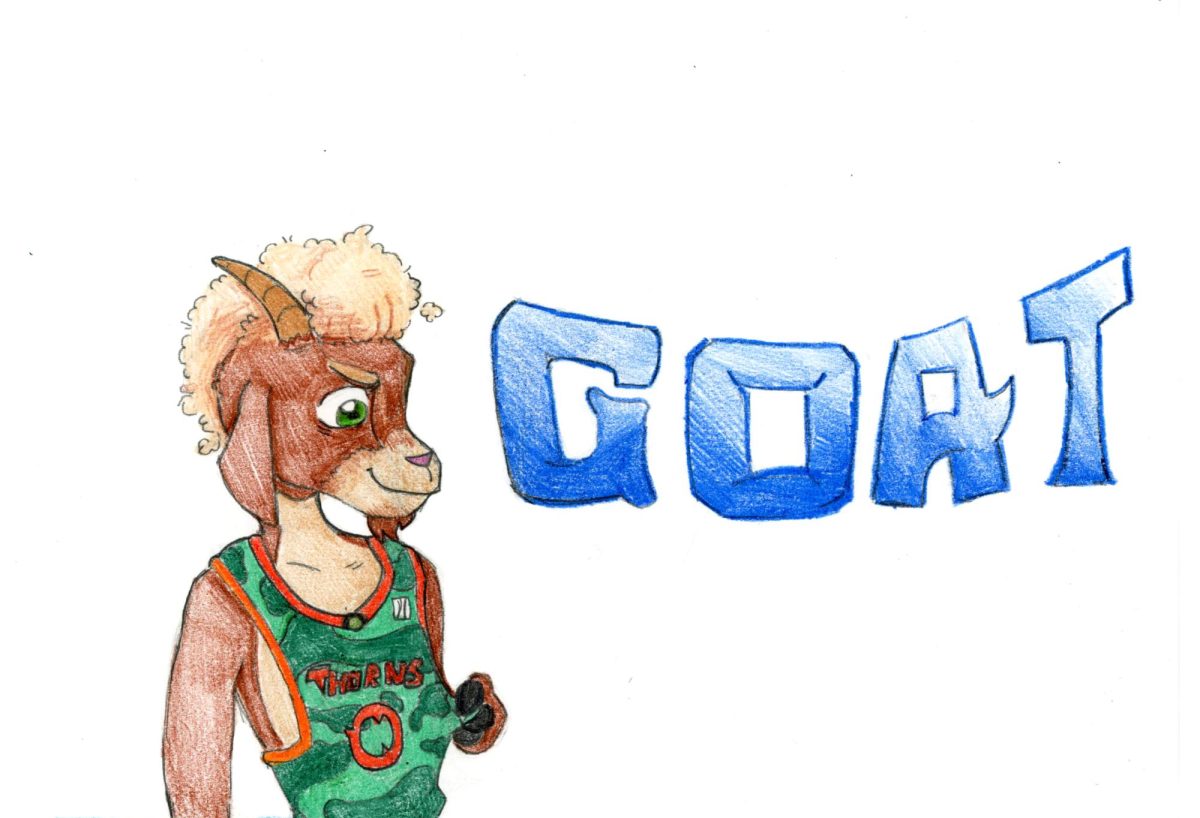
From the very first frame, GOAT makes one thing clear—it doesn’t want to play it safe. It doesn’t ease you in or try to look like every other polished animated movie. Instead, it throws you straight into something raw, loud, and alive, with a gritty, ‘90s Trapper Keeper-style look that feels less like a film and more like emotion splashed across the screen. And honestly, it works.
Sony Pictures Animation has been on a streak lately, but GOAT feels different. It feels riskier. More personal. After films like Into the Spider-Verse, expectations were already high—but this movie doesn’t just meet them, it hits in a completely different way.
Will Harris isn’t just another underdog. He’s a pygmy goat trying to survive in a world that constantly reminds him he doesn’t belong. He’s smaller, quieter, and doubted at every turn. But that’s exactly what makes his journey hit so hard. You don’t just watch him struggle—you feel it. Caleb McLaughlin brings so much heart into Will’s voice, capturing every bit of his nervous energy, his frustration, and eventually, his confidence. There are moments where his voice almost shakes—and instead of making him seem weak, it makes him real.
But the film doesn’t stop at just one emotional arc. Jett Filmore’s character adds a whole different layer. Voiced by Gabrielle Union, Jett isn’t just tough—she’s hurting. And you can feel it. What starts as confidence slowly turns into pressure, then frustration, and eventually something heavier. She becomes someone who pushes others down, not because she’s cruel, but because she’s lost belief in herself.
That part hit close. As an athlete, I’ve seen what a “bad season” can do—not just physically, but mentally. And GOAT doesn’t shy away from that. It shows how one person’s mindset can shift an entire team. When Jett starts to spiral, the team falls with her. Confidence disappears. Energy fades. Everything feels off. But when she starts to rebuild herself, even just a little, you can feel the shift. The team comes back to life. It’s not just about winning anymore—it’s about believing again.
And then there’s the game itself. With Stephen Curry involved, the Roarball scenes don’t just look cool—they feel intense. Fast, chaotic, almost overwhelming at times. It mirrors exactly what competition can feel like when everything is on the line.
By the end, GOAT isn’t just about a sport or an underdog story. It’s about what it feels like to be overlooked, to doubt yourself, and to fight your way back anyway. It’s messy, emotional, and at times uncomfortable—but that’s what makes it stick.
This isn’t just a movie you watch. It’s one you feel.