


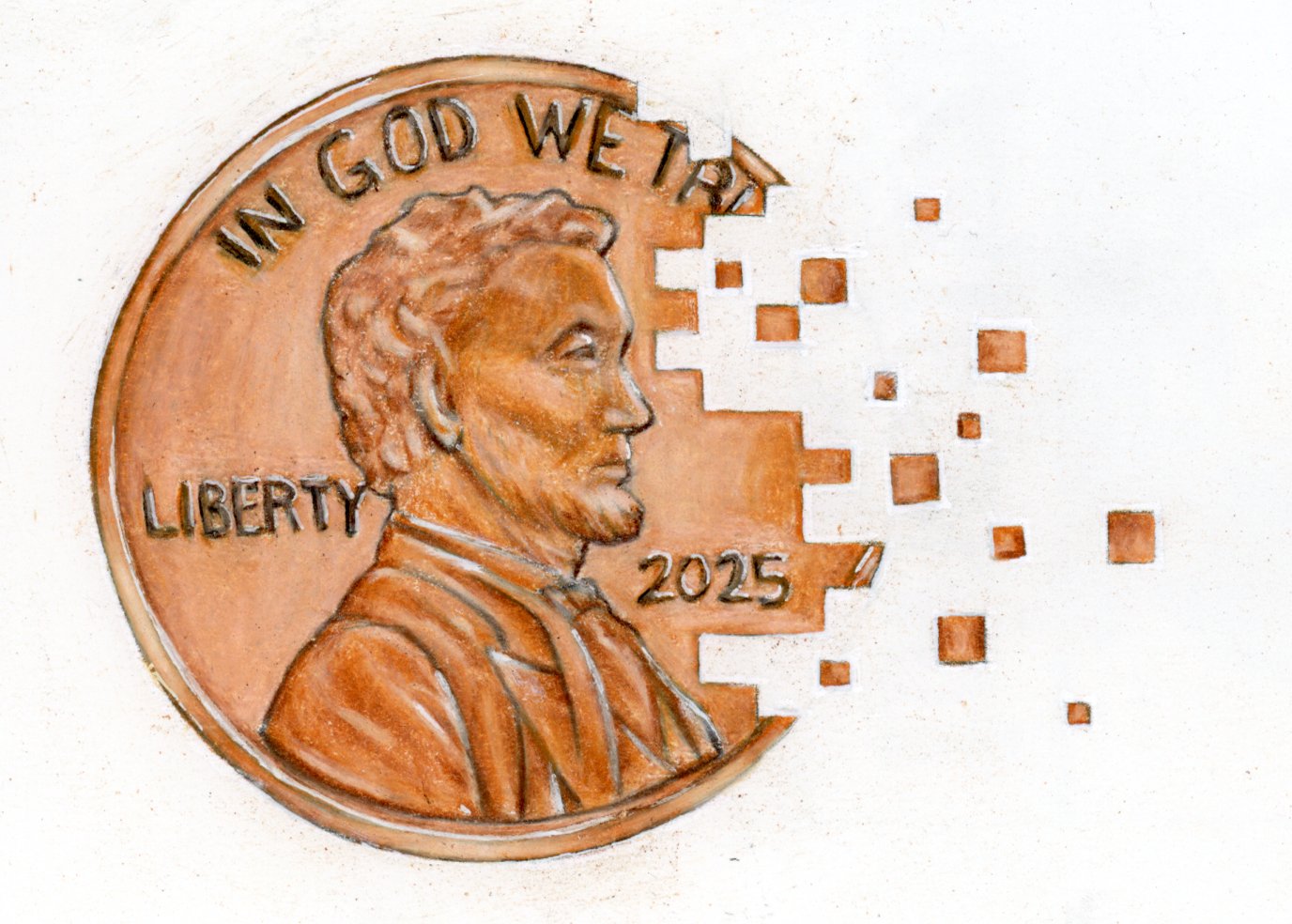
The most useless coin utilized in the modern day is the penny. The majority of people in our society stopped using the penny in the mid-1900s with the advent of credit cards in the ’60s and debit cards in the ’80s. Ever since the introduction of payment via smartphone apps, the use of the penny has dwindled even further. This notion has been further supported by the United States government and businesses around the nation being able to adapt so quickly.

The U.S. Mint has officially minted the last penny, and the final batch will go into circulation in early 2026. From now on, businesses are going to be rounding purchases to the nearest five, in which case a purchase for $19.73 would become $19.75 if you’re paying with cash. This also works the other way around, in which a purchase for $19.72 would become $19.70.
However, this isn’t necessarily a bad thing. Unless you’re counting out exact change for a purchase, you won’t be affected- purchases via card aren’t affected by this change. American citizens as a whole are better off with the destruction of the penny. According to the U.S. Mint’s annual report, a penny costs 3.69 cents to make. From penny production alone, the U.S. Mint reported a loss of $85.3 million in a fiscal year. That’s money going to waste that comes out of the American citizen’s tax dollars.
If anything, it would be upsetting if the penny were still in production. Luckily, stopping the minting of the penny results in an incredible amount of savings per year. This is money that could go to national infrastructure or general improvements in our country.
In the eyes of the average consumer, there will be little to no difference in daily life, and it’s unlikely a difference will develop in the years to come. Also, it’s not as if everyone’s throwing away their pennies; they just aren’t making any more. You can still use the pennies you have as legal tender, and those who already use pennies will likely continue to use them to pay for their goods and services. Therefore, unless you have a habit of collecting each penny that the U.S. mint produces, or only pay with exact change in day-to-day life, you won’t be affected by this change.
The removal of the penny is something to be celebrated! It means fewer coins clogging up the couch, fewer coins to count, and fewer taxpayer dollars being wasted on making an obsolete piece of the currency we use every day.
Other countries, such as Canada, New Zealand, and Australia, have removed their version of the penny already. Their smallest coins have been discontinued in the past few years, the earliest of which, New Zealand, eliminated its one and two-cent coins in 1990. These countries have successfully transferred to the rounding system, while keeping digital transactions exact change, with almost no impact. We’re watching transactions and businesses overall become faster right before our eyes. With stores no longer needing to count so much change, businesses become increasingly more rapid and more efficient, saving both time and money.
All in all, the economic impact of the removal of the penny will be minimal, if observable at all. Inflation will be minimized by this decision, as shown by other countries. Businesses and American taxpayers will save a large amount of time and money. Purchases via card won’t be affected, and on the off chance that you do pay with exact change, your purchase will be rounded to the nearest five for your convenience.



















Allen Jorgensen • Jan 27, 2026 at 1:15 am
The penny went to “crap” in 1982 when they changed the metal composition of the penny from copper to zinc making it worthless.