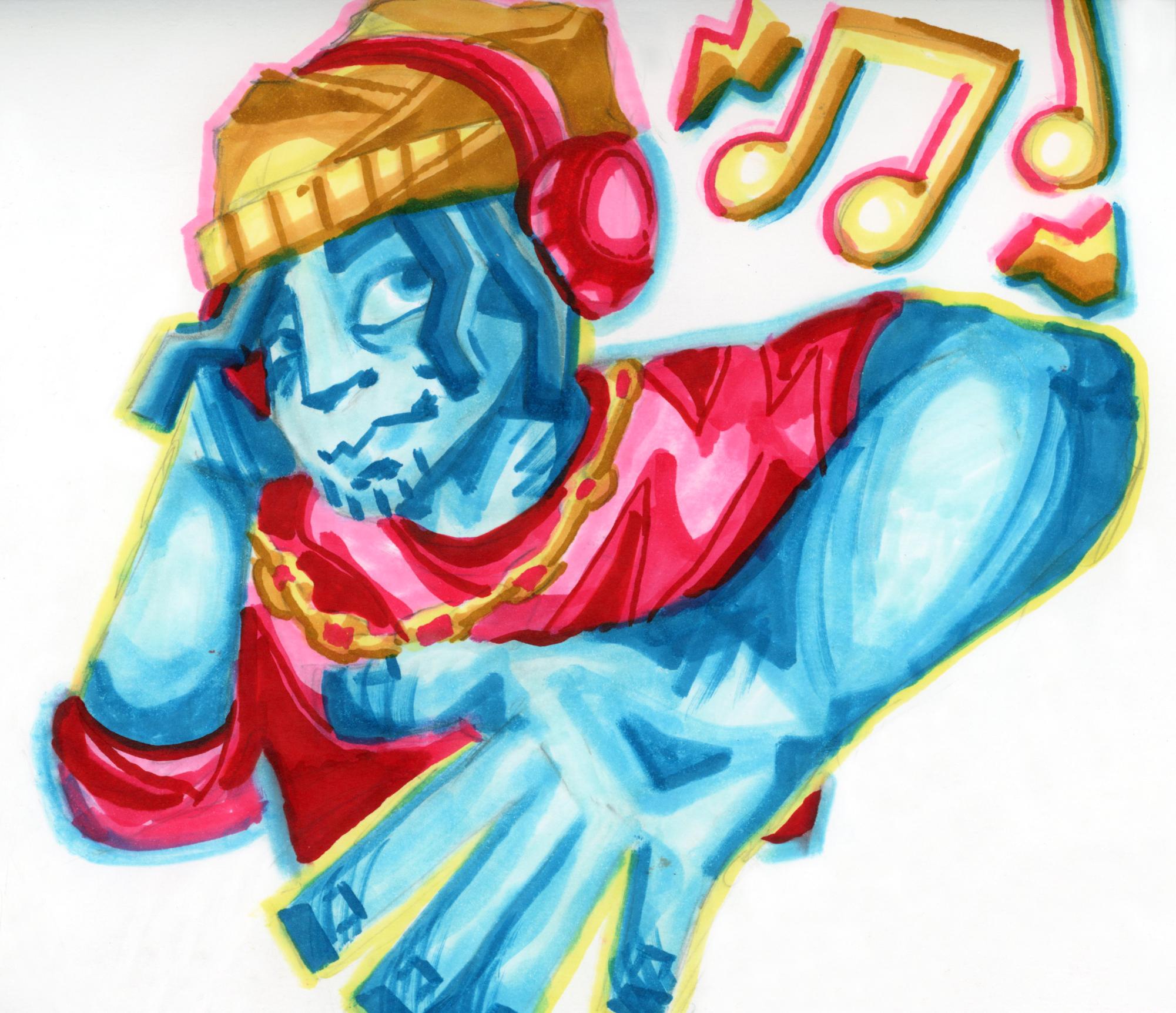
Since the ‘60s, “underground” has been an adjective to describe the music scene built around counterculture, rebellion from the norm, and representation of the obscure and unknown. Frank Zappa, an icon of the U.K underground in this era, describes that the “mainstream comes to you, but you have to go to the underground.” Through the ‘70s and ‘80s, “underground” started to encompass other alternative scenes such as goth or punk. Over many decades, the term has evolved to represent many different music subcultures, but most commonly today it is used to refer to the underground rap scene. The question which proposes itself then is; how underground is the underground rap scene?
Whether or not rap is considered underground depends on how you define the scene itself. Some might say it requires independence from a label and defiance from the “mainstream,” while others say its music spread by word of mouth and is rooted in regional culture. But one consistency is that almost all fans believe that it requires an experimental sort of sound that defies the current conventional “rules” for music. And I, for one, would agree. I do not believe that the title of “underground rap” should be a competition on who has the least listeners per month, but rather that they should be artists who are experimental with their sound and produce unique music outside of the conventional norm. I also think that many new age fans don’t consider the many subgenres within the underground scene and thus discredit artists that don’t align with their preferred subgenre. This leads to rifts within the community and arguments about which artists deserve the title of “underground” and which don’t.
One trend that perpetuates this standard is the trend of making “underground icebergs,” which is a chart showing artists at the different “levels” of underground music (represented with their depth on a picture of an iceberg). Most of the time when these are posted on social media there are people arguing saying that either the surface-level artists are actually more niche and deserving of a lower spot or that the people lower down on the iceberg are more surface-level than displayed. These disparities lead to arguments and rather than debating on the actual music they produce, it becomes a debate on the “nicheness” of the artist and their monthly listener count. Underground artists with a significant amount of listeners will always seem mainstream to someone whose favorite artist may be lesser known, but when you really look at it from an outsider perspective, the average day-to-day person you interact with is not going to know 90 percent of these artists, whether people within the community rank them as mainstream or not. The underground label represents a genre of music, based not on how niche an artist is, but on the music produced and how it fits the aforementioned standards.
I would say that the current underground rap scene is deserving of the “underground” title, but some of the fans misconstrue what it really means for the sake of presenting themselves as unique and non-conformist. In a community all about non-conformity, subscribing to the belief that one must listen to solely unknown and underrated artists is conformist in and of itself.